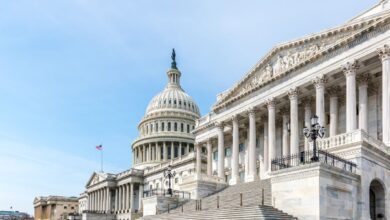
Lawmakers return to Washington with roughly three working weeks to resolve a crowded year-end agenda that includes expiring enhanced Affordable Care Act subsidies, a new defense authorization and a package of spending bills intended to blunt a late-January funding deadline. The compressed schedule raises governance, fiscal and policy stakes as leaders weigh health care, sanctions and funding priorities.
The tight timeline compresses complex negotiations into a narrow window and increases the risk of a fresh funding crunch. Senate and House leaders have flagged early-December votes on health subsidy legislation and an effort by appropriators to move a four-bill spending package aimed at avoiding a Jan. 30 funding cliff. According to a Fox News report, senators expect final votes on some measures in the second week of December.
The decisions carry immediate consequences for millions of Americans who receive federal premium tax credits, for Defense Department planning and for overall fiscal management of the federal government. The speed of negotiations also raises procedural questions about which chamber should originate politically sensitive measures, such as new sanctions, and how far leadership will respect regular committee jurisdiction. For ongoing coverage of these developments, see our Congress Coverage.
Background
Enhanced premium tax credits for Affordable Care Act enrollees were expanded during the COVID-era policy response and have been extended or modified through subsequent congressional and administrative actions. Those credits reduce monthly premiums for many Marketplace enrollees and, if allowed to expire, could put higher premiums or reduced tax credits in place for millions of people who buy coverage on exchanges.
Other major items on the calendar include:
- The annual National Defense Authorization Act, which sets policy and authorizes funding levels for the Defense Department.
- A backlog of executive and judicial nominations awaiting Senate action.
- A proposed four-bill appropriations package expected to include bills affecting Defense, Labor-HHS, Transportation-Housing and Commerce-Justice-Science funding streams.
- Possible action on bipartisan sanctions legislation related to Russia and other foreign policy items tied to recent funding agreements.
What Officials Are Saying
Sen. John Thune, R-S.D., a senior Republican, has acknowledged the difficulty of crafting a durable fix for the expiring subsidies and indicated the chamber aims to hold a vote no later than the second week of December. Other Republican leaders have discussed proposals that would change how subsidies are delivered, including options that channel some assistance through Health Savings Accounts. The White House, while signaling interest in preserving affordability, has not released a formal legislative proposal for the immediate return.
Sen. Jeanne Shaheen, D-N.H., who has supported extensions of enhanced credits in prior Congresses, said she has held constructive conversations with Republican colleagues about preventing a lapse. At the same time, Senate Republicans and Democrats differ on how to pair any subsidy fix with offsets or policy changes.
Sen. Susan Collins, R-Maine, a senior member of the Senate Appropriations Committee, said there is House interest in advancing additional appropriations bills this month and framed a multibill package as a practical step toward avoiding another funding deadline. Appropriators are discussing a four-bill package that leaders hope could be cleared in time to ease pressure on the rest of the fiscal year schedule.
The recent stopgap funding agreement that ended a partial lapse contained a contested provision dealing with civil remedies and notice requirements for certain congressional records requests. Critics say the language could chill oversight; supporters argue it protects sensitive commercial or personal information. That provision, along with the question of whether a sanctions measure should originate in the House or the Senate, is expected to be part of interchamber bargaining.
Procedural Options and Stakes
Leaders face three broad procedural paths: negotiate bipartisan, bicameral bills through regular order; pass short-term continuing resolutions to preserve funding levels while negotiations continue; or use budget reconciliation next year for narrowly budget-related changes that can pass the Senate with a simple majority. Reconciliation is limited by strict rules and must be tied to budgetary language, which narrows the range of policy items that can be included.
Using reconciliation for health subsidies could offer a faster path if bipartisan agreement proves elusive, but it would require careful drafting to meet parliamentary requirements. Appropriations leaders warn that moving complex measures through the House may be slow because of multiple committee jurisdictions, and Speaker Mike Johnson, R-La., has said bills with revenue or multiple committee implications could face a longer process in the lower chamber.
On the fiscal side, failing to move the appropriations bills heightens the risk of another stopgap measure or a late funding fight that can unsettle agencies, delay contracts and add uncertainty for defense planning. For Defense Department officials, delays in the NDAA or appropriations decisions can complicate acquisition schedules and troop readiness planning.
Reactions and Next Steps
Some senators have signaled they are willing to use reconciliation next year if regular order proves too slow, while others caution that reconciliation is politically risky and procedurally constrained. Sen. John Kennedy, R-La., has publicly criticized hesitation to embrace reconciliation, calling it a necessary tool when bipartisan solutions are not forthcoming.
In the coming days, congressional leaders plan to:
- Debate and vote on proposals to extend or reform enhanced health subsidies.
- Try to move a four-bill appropriations package through the Senate and press the House to consider the measures.
- Take up the NDAA and outstanding nominations on the Senate floor.
- Attempt to resolve jurisdictional disagreements over sanctions legislation and other policy riders.
Analysis
The compressed calendar forces leaders to weigh speed against deliberation. From a governance perspective, rushing high-impact measures risks shortchanging committee scrutiny and public transparency, especially on issues that affect affordability, national security and oversight. The health subsidy debate illustrates the tension: allowing credits to lapse would have immediate effects on premiums and enrollment, but major changes to benefit delivery warrant time for technical review.
Fiscal accountability is also at stake. Lawmakers must decide whether to bundle bills to move quickly or to preserve regular order and accept the longer path that accompanies multiple committee referrals. Each choice carries tradeoffs for public trust, agency planning and congressional control over policy outcomes. The coming three weeks will test congressional capacity to balance urgent policy fixes with the procedural norms that underpin accountability and coherent governance.