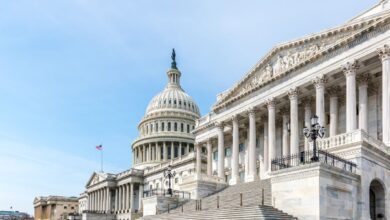
WASHINGTON – House appropriators and foreign affairs leaders held a joint briefing Tuesday to examine what lawmakers and outside experts described as escalating, targeted attacks on Christians in Nigeria. The session, led by Rep. Mario Diaz-Balart, R-Fla., is part of a White House-ordered review of recent massacres and possible U.S. policy responses that could affect aid, sanctions and other instruments of leverage.
The briefing brought together government commissioners, academics and legal advocates who disputed the Nigerian government’s characterization of the violence as primarily criminal or localized. Lawmakers said the review could lead to targeted sanctions, visa restrictions and conditionality on assistance, measures intended to press Abuja to improve security and accountability and to protect vulnerable communities. Reporting on the session is consistent with earlier coverage, according to reporting by Fox News.
Why this matters
Lawmakers framed the inquiry as a test of U.S. leverage in a strategically important African country. Nigeria is one of the continent’s most populous nations and a partner on counterterrorism, maritime security and regional stability. How Congress balances pressure and partnership will shape U.S. influence with Abuja and affect humanitarian access, counterterrorism cooperation and refugee flows that can cross borders.
Members signaled plans for continued oversight through Appropriations, Foreign Affairs and Financial Services committees. In discussing leverage, several lawmakers invoked concerns about the State Department’s approach to religious-freedom designations, arguing that the absence of a formal U.S. designation for severe violations has complicated diplomatic options. In our Congress Coverage, the debate over designations and sanctions has repeatedly emerged as a central tool for accountability.
Background on the violence
Attacks have included village raids, mass abductions and targeted killings over several years. They occur in a complex security environment that features Islamist insurgents, criminal gangs and communal conflicts between farmers and herders. Experts at the briefing said that while some violence is criminal or economic in motive, other attacks show patterns consistent with systematic targeting of religious minorities.
U.S. and international monitors have long raised alarm about violence in Nigeria’s Middle Belt and northern states, where clashes between communities and armed groups have frequently overlapped with religious identity. Islamist groups such as Boko Haram and Islamic State West Africa Province continue to wage insurgencies in parts of the northeast, while banditry and communal militias affect multiple regions.
What officials told lawmakers
Vicky Hartzler, a commissioner on the U.S. Commission on International Religious Freedom, said she views freedom of religion in Nigeria as under severe strain and called for punitive steps where there is evidence of official complicity. Hartzler cited mass abductions and village attacks that she said disproportionately affect Christian communities.
Speakers outlined several concrete options for U.S. action, including:
- targeted sanctions on officials with credible evidence of complicity,
- visa restrictions and blocking of assets held in the United States,
- conditioning foreign and humanitarian aid on measurable accountability, and
- a Government Accountability Office review of prior U.S. assistance to Nigeria to assess effectiveness and risks of diversion.
Dr. Ebenezer Obadare of the Council on Foreign Relations challenged Nigeria’s public narrative that most violence is not religiously motivated. Obadare said jihadist groups act in part for religious reasons and that geographic and demographic factors help explain casualty patterns, rather than equal targeting across faiths.
Sean Nelson of Alliance Defending Freedom International described Nigeria as one of the deadliest countries for Christians in recent years and urged tighter oversight of assistance. Nelson recommended routing some aid through vetted faith-based or nongovernmental partners to reduce corruption risks, and he asked for greater U.S. transparency on kidnappings and ransom payments.
Reactions and next steps
Lawmakers discussed several paths for pressing Nigeria, including diplomatic pressure, sanctions under existing human-rights authorities, and stricter conditionality on U.S. bilateral assistance. Some members signaled support for legislative measures that would make restrictions statutory rather than solely executive actions.
Briefing participants noted recent steps by Nigerian authorities that could reflect a shift in priorities, including directives to redeploy police officers from protective details to frontline security duties and public statements by Nigerian legislators acknowledging an increase in coordinated violence. U.S. embassy and Nigerian government officials did not provide a response at the briefing; the Nigerian Embassy did not immediately respond to requests for comment.
Legal and policy tools under consideration
Congressional advisers outlined tools already available to U.S. policymakers. These include visa bans under immigration law, targeted sanctions using the Treasury Department’s authorities, and the Global Magnitsky human-rights sanctions regime. The U.S. can also use foreign-assistance levers, such as reprogramming funds, tightening vetting for assistance recipients and requiring GAO or inspector general audits to document how aid is used.
Experts cautioned that punitive measures carry tradeoffs. Suspension or heavy conditioning of aid can curtail programs that fund local security cooperation, health services and humanitarian relief. Sanctions aimed at officials are designed to impose costs without harming civilians, but effectiveness depends on multilateral coordination and on domestic accountability in Nigeria.
Analysis
The briefing underscores a persistent governance challenge in Nigeria: a gap between security responsibilities and citizen protections. For U.S. policymakers, the central question is how to use limited levers such as sanctions and aid conditions to compel better Nigerian responses without undermining necessary cooperation on counterterrorism and humanitarian access.
Accountability and transparency are core themes. If congressional review uncovers credible evidence of official complicity or systematic targeting of religious communities, restrictions on visas and assets are standard tools that can impose costs on individuals while preserving broader bilateral ties. At the same time, Congress must weigh fiscal and operational tradeoffs when conditioning assistance, including the risk that reduced funding will hamper programs that stabilize communities and reduce recruitment by violent groups.
Ultimately, the session reflects growing congressional interest in holding partner governments to human-rights standards while preserving U.S. strategic interests. How lawmakers calibrate oversight, reporting requirements and potential sanctions will shape U.S. credibility on human rights and affect the trajectory of U.S.-Nigeria cooperation on security, migration and regional stability.