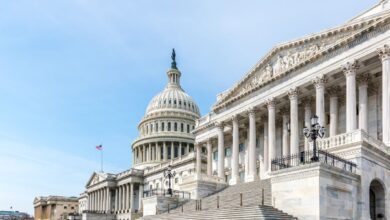
WASHINGTON — Senate Minority Leader Chuck Schumer, D-N.Y., said Monday that he and other senators will file a war powers resolution intended to block President Donald Trump from ordering U.S. military strikes against Venezuela without explicit congressional authorization.
Schumer said the resolution is designed to force a clear, up-or-down vote in Congress before American forces can be used against the South American country and to reassert the legislative branch’s role in decisions to use force. The effort, he said, is expected to draw bipartisan support from senators concerned about both constitutional limits on executive power and regional stability, and reflects debates tracked in our Congress Coverage.
Why it matters
Backers say the measure would prevent unilateral military action that could embroil the United States in a broader conflict in the region, while preserving narrow self-defense authorities. Opponents argue limiting the president could impede fast responses to emergent threats, including maritime interdictions tied to illicit narcotics trafficking that officials say affect U.S. border security.
The move follows an earlier, unsuccessful congressional effort this year to restrict military action toward Venezuela and public comments by the president that heightened lawmakers’ concerns. According to news reports, the president posted on social media that airspace above and surrounding Venezuela should be considered closed, a comment senators cited as raising the risk of a sudden escalation.
Background
Senators Tim Kaine, D-Va., and Rand Paul, R-Ky., have signaled support for the new measure, and Schumer said Rep. Adam Schiff, D-Calif., is expected to back the effort in the Senate. Earlier this year, Kaine, Paul and Schiff sponsored a joint resolution that would have directed the president to terminate the use of U.S. armed forces in or against Venezuela unless Congress explicitly authorized such action or declared war. That earlier measure preserved exceptions for defending the United States from an armed attack or an imminent threat but failed to advance after a Senate procedural vote in which most Republicans voted against moving forward.
The proposed new resolution is part of a longer debate over the constitutional allocation of war powers. Congress passed the War Powers Resolution of 1973 to check presidents after extended U.S. involvement in Vietnam, requiring notification to Congress and setting limits on the duration of unauthorized hostilities. Presidents of both parties have disputed aspects of that law, and courts have often declined to resolve the core constitutional question, leaving much of the practice to political bargaining in Congress.
Details from officials and records
The White House has described recent U.S. military activity near Venezuela as part of a campaign to disrupt drug-smuggling operations. A White House spokesperson told reporters the administration is using what it called every element of American power to interdict narcotics flows, and has directed strikes at designated narcoterrorists and at vessels suspected of running drugs.
- Who is sponsoring the resolution: Schumer named Tim Kaine and Rand Paul as early supporters, and said Adam Schiff is expected to join.
- Earlier vote: A prior resolution this year was blocked in the Senate after most Republicans voted against advancing it.
- Legal language: The earlier proposal would have required congressional authorization or a declaration of war before hostilities against Venezuela could continue, while preserving narrow self-defense exceptions.
Administration officials have argued that quickly responding to narcotics trafficking and threats in the hemisphere can require executive flexibility. Supporters of congressional measures counter that any sustained or expanded military campaign should be subject to legislative oversight and formal authorization so lawmakers can weigh the costs and regional risks.
Reactions and next steps
Schumer and other senators backing the new push said they will file the war powers resolution immediately if the president moves to pursue strikes. Kaine told colleagues he and his allies are prepared to press for expedited consideration, though Senate rules and the potential for a filibuster could slow or block a final vote.
Supporters framed the measure as restoring constitutional checks and preventing an open-ended U.S. military involvement without broader congressional consent. Opponents have argued that restricting the president’s hands in the Western Hemisphere could hamper rapid responses to threats, particularly those tied to transnational criminal networks and narcotics trafficking that officials link to border security concerns.
Procedurally, war powers resolutions can be fast-tracked under special Senate procedures or attached to other must-pass legislation, but they remain vulnerable to procedural barriers. Even if a resolution passes both chambers, a presidential veto would return the issue to congressional override dynamics, which require a two-thirds majority in each chamber and are difficult to achieve.
Analysis
The proposed resolution underscores a recurring governance tension between the executive’s need for operational flexibility in security matters and Congress’s constitutional responsibility to authorize war. Requiring explicit congressional authorization for strikes would strengthen legislative oversight and reduce the risk of protracted U.S. involvement without public debate or fiscal review.
At the same time, tighter limits on presidential action could complicate responses to fast-moving threats in the hemisphere, including interdictions at sea and operations against groups tied to drug trafficking. That tradeoff makes the question one of both constitutional principle and practical national security policy.
Politically, the effort may produce an unusual bipartisan alignment as senators across the spectrum balance separation of powers, regional stability and domestic security. Its progress will test the Senate’s capacity to convert public concern and floor rhetoric into a binding decision on the use of military force. Whichever path lawmakers take, the debate will shape future expectations about accountability, fiscal cost and congressional involvement in decisions that could affect U.S. troops and regional security.