President Donald Trump told reporters in the Oval Office that the United States is preparing to extend its campaign against narcotics networks into Venezuela, saying land operations could begin “very soon.” He described U.S. intelligence as having identified trafficking routes, safehouses and production sites inside Venezuelan territory and framed the move as necessary to reduce the flow of synthetic opioids into the United States.
The announcement, reported by Fox News, marks a potential expansion of U.S. military and law enforcement activity in a country Washington has long criticized. If carried out, land operations inside Venezuela would raise immediate questions about legal authority, regional stability and the risk of direct confrontation with Venezuelan forces.
The potential operation fits within broader Conflict Coverage of U.S. counter-narcotics and regional security, and it touches on issues of border integrity, public safety and executive accountability.
Background
Trump has for months framed the opioid crisis as a central national security and public health threat and has repeatedly accused the Venezuelan government of facilitating the movement of criminals and drugs toward the United States. On the day of his remarks he again alleged that Caracas had sent “killers, murderers” and gang members into the United States during migration flows, a claim the president attributed to U.S. intelligence assessments.
The administration says it has intensified maritime strikes on vessels it says were carrying illegal drugs toward U.S. shores. Officials offered few operational specifics about how land-based actions would be authorized or executed, and they have not released an overall strategy detailing objectives, legal basis or force levels for operations inside Venezuela.
Venezuela shares long and porous borders with Colombia and Brazil and has a mix of state security forces, irregular armed groups and criminal organizations that U.S. officials say are involved in drug production and trafficking. The United States has historically focused counter-narcotics efforts on Mexico and transnational criminal organizations operating there, but U.S. leaders in recent years have cited growing concerns about other routes and production hubs in the Western Hemisphere.
What Officials Say and What Is Publicly Known
- The president said U.S. intelligence has mapped trafficking routes, safehouses and production sites in Venezuela. He characterized an escalation from maritime to land operations as a necessary next step to disrupt supply chains for synthetic opioids.
- Administration officials say maritime strikes have increased, though public details about targets, authorities invoked and legal reviews remain limited.
- Trump tied the proposed escalation to the toll from synthetic opioids, noting high overdose numbers in the United States. Federal data show U.S. drug overdose deaths reached historically high levels in recent years, with more than 100,000 deaths reported in a recent year and elevated totals continuing afterward.
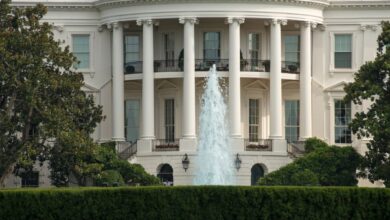
The president made these statements during a question-and-answer session in the Oval Office. The White House did not immediately provide additional documentation or a timeline for any land operations when asked for comment.
Legal and Operational Questions
Carrying out land operations inside a foreign country raises standard legal questions about sovereignty and the source of authority for kinetic action. The president could seek congressional authorization, invoke existing counter-narcotics authorities, or assert inherent powers tied to national self-defense; each pathway carries distinct legal and political consequences.
International law and customary norms require that military operations within another state’s territory either have that state’s consent, be conducted in self-defense against an imminent threat, or be authorized by an appropriate international mandate. Absent host-nation consent or a U.N. mandate, U.S. operations risk diplomatic backlash and potential legal challenges.
Operationally, land campaigns against trafficking networks differ from maritime interdiction. They can require sustained intelligence, liaison with local partners, precision targeting to avoid civilian harm, and resources for stabilization and follow-on law enforcement. The involvement of Venezuelan security forces and allied armed groups adds complexity and raises the possibility of unintended escalation.
Regional and Domestic Reactions
Any U.S. incursion into Venezuelan territory would likely prompt scrutiny from Congress and reaction from regional governments. Countries in the region have varied relationships with Caracas; some have denounced the Venezuelan government for years, while others oppose unilateral foreign interventions on principle. Neighbors such as Colombia and Brazil would face immediate operational and humanitarian implications if cross-border activity increased.
Members of Congress from both parties often demand oversight of military commitments, particularly those that could lead to prolonged engagement or casualties. Past U.S. counter-narcotics efforts have combined military, law enforcement and diplomatic tools, and lawmakers may press the administration for a formal plan, legal memos and budget estimates before endorsing expanded operations.
Human rights and humanitarian organizations will also observe how operations are planned and executed, including measures to protect civilians, respect asylum processes and prevent forced displacement. Any strikes or raids that cause civilian casualties could erode international support and complicate long-term efforts to curb trafficking.
Challenges to Effectiveness
Disrupting production and distribution nodes abroad can produce tactical successes, but experts caution that kinetic actions alone rarely solve transnational drug problems. Effective campaigns typically combine targeted operations with efforts to reduce domestic demand, strengthen regional law enforcement capacity, improve border security, and disrupt financial networks that sustain criminal groups.
Quality of intelligence will be decisive. Acting on inaccurate or incomplete information risks hitting the wrong targets and provoking diplomatic crises. Sustained success also depends on post-action plans for prosecutions, asset seizures and rebuilding local institutions to prevent reconstitution of trafficking networks.
Analysis
The president’s remarks signal a potential shift from maritime interdiction to land operations that involve tradeoffs across national security, public safety and governance. For policymakers, the central questions will be whether the administration can clearly define objectives, secure appropriate legal authorization and marshal the diplomatic and operational partnerships needed to limit blowback.
Congressional oversight can help ensure fiscal accountability and a clear strategy before the United States expands kinetic actions into another sovereign territory. Regionally, the United States will need to balance urgency to disrupt drug flows with respect for international norms and the political sensitivities of neighboring states.
Ultimately, the effectiveness of any expanded campaign will hinge on sustained intelligence, partner cooperation and an integrated approach that pairs targeted operations with measures to reduce demand, bolster law enforcement and strengthen rule of law in the region. Without that integrated approach, tactical successes may not translate into lasting reductions in the supply of synthetic opioids reaching U.S. communities.