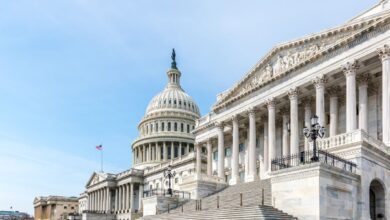
A Virginia man was arrested early Thursday in connection with two pipe bombs discovered near the U.S. Capitol on Jan. 5, 2021, federal law enforcement officials said. The arrest closes a nearly five-year investigation into devices that were left close to the Republican National Committee and Democratic National Committee headquarters the day before the Jan. 6 breach of the Capitol.
The Federal Bureau of Investigation said the arrest followed extensive evidence gathering and analysis, including video footage that showed a person placing the devices more than 16 hours before officers found them, according to local reports. The probe, described by the FBI as lasting nearly five years, involved multiple investigative techniques to link the devices to a suspect and to establish a timeline.
The arrest matters for public safety and accountability because the devices were left adjacent to the two major party headquarters in the capital and were connected in timing to a wider assault on federal property. The case highlights the continuing effort by federal authorities to address threats tied to the events surrounding Jan. 6 while building court-ready cases, a balance explained in our Crime Coverage.
Background
On Jan. 5, 2021, law enforcement discovered two improvised explosive devices near the headquarters of the Republican National Committee and the Democratic National Committee in Washington, D.C. The devices were found within a short distance of the U.S. Capitol, where large demonstrations were already underway ahead of congressional certification of the 2020 election results.
Investigators later released surveillance footage showing an individual placing the devices more than 16 hours before they were located by officers. At the time, the FBI and other agencies treated the devices as credible threats and obstructed potential access while bomb technicians rendered them safe.
Investigation and evidence
Federal investigators said they relied on a combination of video analysis, witness interviews, physical and trace evidence, and digital forensics over the course of the multi-year probe. Public statements and court documents in similar national security and explosives investigations indicate such inquiries typically include review of surveillance networks, forensic examination of device components, footwear and clothing comparisons, and cellphone or location data when available.
The FBI previously released images of a person who appeared to place the devices, showing clothing and footwear details. Officials described the individual as wearing a gray hoodie, face covering, glasses, gloves and Nike Air Max Speed Turf sneakers. Investigators also examined material from the devices for fingerprints, DNA and components that might identify manufacturing or purchase sources.
Long-term investigations into explosive devices often involve coordination among federal agencies, local police and municipal bomb squads. That coordination can be necessary when incidents occur near federal property and when devices could present a wider public safety risk across jurisdictions.
Details from officials and records
Authorities identified the suspect only as a male who resided in Virginia, and law enforcement released few immediate personal details at the time of the arrest. The FBI said agents arrested him early Thursday after developing evidence that investigators said supported his location and identification.
- Officials said evidence collected during the investigation included the earlier video footage and other corroborating material developed over nearly five years.
- Authorities said they have not publicly linked the arrest to other criminal cases related to the Jan. 6, 2021, breach of the Capitol, and public statements indicated coordination but not consolidation of separate prosecutions.
- Federal prosecutors had not, at the time of the arrest, publicly filed charges or disclosed a charging timetable. Investigators typically present their findings to a U.S. attorney’s office for review before any indictment or criminal complaint is unsealed.
Reactions and next steps
Federal officials provided limited immediate comment following the arrest, and law enforcement spokespeople referred questions about formal charges to prosecutors. In similar cases, the Justice Department often seeks to balance the public interest in disclosure with the need to protect investigative techniques and evidence integrity, particularly before charges are filed.
Potential federal offenses related to the placement of explosive devices near federal property can include statutes covering illegal possession or transfer of destructive devices, use of explosives to threaten or damage property, and related conspiracy or weapons charges. Any specific charges in this case will depend on the evidence gathered and prosecutorial decisions by the U.S. attorney’s office handling the matter.
As the case moves forward, officials could seek a federal court warrant for search and seizure, file a criminal complaint to begin court proceedings, or present evidence to a grand jury. Pretrial proceedings would determine the timeline for any public filing of charges and for initial court appearances. Defendants in federal cases have the right to counsel and to contest evidence through the court process.
Analysis
The arrest underscores several governance and public safety challenges that federal law enforcement faces when confronting politically charged threats. First, the placement of explosive devices near partisan headquarters and proximate to federal institutions elevates the potential for significant harm and politicizes investigative attention. That increases pressure on investigators to be thorough while protecting the integrity of their work.
Second, lengthy probes can strengthen prosecutorial cases by allowing time for forensic testing, digital analysis and corroboration across sources. Building a case that can meet federal evidentiary standards often requires months or years, particularly when devices are improvised and when traces must be tied to a suspect beyond reasonable doubt.
Finally, the case highlights questions about transparency and resource allocation. Federal agencies must weigh what to disclose to the public against the need to preserve investigative leads. Lawmakers and oversight bodies may press for greater clarity on how such high-profile investigations are prioritized and resourced, especially when incidents intersect with national security and public trust in institutions.
As authorities determine whether to file charges, the case will test the federal system’s capacity to deliver accountability while protecting civil liberties and ensuring a fair legal process. The outcome will also shape public perceptions about the effectiveness of law enforcement responses to threats that targeted democratic institutions in 2021.