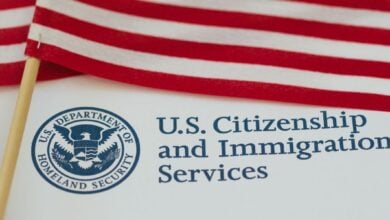
Ohio Secretary of State Frank LaRose announced that the state has signed a data-sharing agreement with the Department of Homeland Security that will provide Ohio at least 20 years of access to the federal Systematic Alien Verification for Entitlements, or SAVE, database. The agreement, LaRose said, will allow the state to obtain verifiable records for citizenship checks and to run bulk verification requests that his office says were previously limited or costly.
The long-term pact resolves litigation LaRose filed against DHS and is intended to streamline Ohio’s efforts to identify noncitizen registrations and clean voter rolls. The issue intersects with broader questions about election administration and oversight that are frequently covered in our Politics Coverage, including how states balance ballot security with voter protections.
Background
SAVE is a DHS system operated by U.S. Citizenship and Immigration Services that helps confirm immigration status for benefit eligibility and other government purposes. Agencies that need to verify an individual’s immigration or citizenship status can query SAVE. Historically, access has been provided under agreements that limited how queries could be run and often involved per-query verification processes and fees.
State election officials and some secretaries of state have sought broader SAVE access to support voter roll maintenance, saying the current process can be slow or costly when applied to large registration lists. Critics and voting rights groups have warned that SAVE was not designed as an election-administration tool and that database errors, incomplete records, or mismatches could wrongly flag eligible voters.
Details From Officials and Records
LaRose’s office said the agreement guarantees long-term, sustained access and the technical ability to support bulk queries to maintain accurate registration lists. According to local reports, the office also said it had already removed tens of thousands of registrations it deemed improper or abandoned ahead of the 2024 election and had pursued criminal referrals in some cases.
- The office referred 1,084 noncitizen registration cases to the Justice Department for potential prosecution, and said 167 of those appeared to have cast ballots in a federal election since 2018.
- Among the cases cited by the office: 99 individuals who appear to have voted in two states in the same federal election; 16 who appear to have voted twice in Ohio in the same federal election; and 14 who appear to have voted after the date of their death.
- LaRose’s office said it identified four instances it described as ballot harvesting and two registrations it described as occurring at unlawful residences.
- Separately, Ohio removed more than 155,000 registrations it described as abandoned or inactive for at least four consecutive years.
All of the specific figures above are attributed to the secretary of state’s office. State officials say that sustained SAVE access will provide documentation to support those determinations and will reduce administrative and per-query costs that previously limited large-scale checks.
Reactions and Next Steps
LaRose praised the agreement as giving Ohio the tools to ensure only citizens are registered to vote. DHS has not publicly released detailed terms of the deal. LaRose’s office said it will continue reviewing registrations and will use the newly available federal data to pursue removals and referrals where records indicate noncitizen status or other irregularities.
Voting rights advocates and some civil rights groups caution that reliance on SAVE for voter-cleanup carries risks. They point to known limitations of administrative databases, including potential delays in updating naturalization records, inconsistent historical recordkeeping, and possible mismatches when names or identifiers differ. Those groups say any process that leads to removal from the rolls should include clear notice, an opportunity to contest, and careful human review to avoid disenfranchising eligible voters.
Federal law also frames how states must conduct voter-roll maintenance. The National Voter Registration Act requires states to keep accurate registration lists but also requires safeguards to prevent improper removal of eligible voters. Election officials must balance the duty to maintain accurate rolls with procedural protections for individuals who are flagged by database checks.
Legal and Technical Considerations
The 20-year term and bulk-query capability shift much of the dispute from litigation to implementation. The effectiveness of the agreement will depend on technical interoperability, data quality, and record-keeping practices. State election systems will need procedures to match SAVE records to voter registration files reliably and to document steps taken in each case.
Experts say bulk matching projects present technical and human review challenges. Automated matches can generate false positives when records differ by name spelling, address history, or other identifiers. Good practice in such programs includes records-level audit trails, independent review of matches that would trigger removals, and publicly available reporting on outcomes and error rates.
What This Means for Governance
For state managers and federal partners, the agreement represents a long-term administrative commitment that will require ongoing oversight. That oversight can take the form of audits, legislative review, and transparency about how data are used and how contested cases are resolved. Accountability mechanisms will be important to ensure the agreement does not produce unintended consequences for election access.
Analysis
The agreement highlights the tension between two governance imperatives: securing the integrity of voter rolls and protecting eligible voters from improper removal. Easier access to federal verification systems can speed identification of registrations that may be inaccurate or unlawful and can reduce per-query costs that previously limited large-scale checks. Those are legitimate administrative goals tied to public confidence in elections.
At the same time, reliance on SAVE and similar databases raises questions about oversight, data accuracy, and procedural safeguards for voters flagged by automated checks. If administrative matches are treated as presumptive proof without adequate notice and review, states risk removing eligible voters and inviting legal challenges. Long-term success will depend on transparent procedures, independent audits, and clear channels for voters to correct records.
Finally, by resolving litigation and obtaining a sustained access commitment, the dispute now turns to execution. That makes technical interoperability, record-keeping, and transparency key factors in whether the agreement achieves its stated goals without eroding trust in the registration system or creating new legal and administrative burdens for voters and officials.